

logo

Drop us a Line

info@themusictherapycenter.com

music therapy Tag

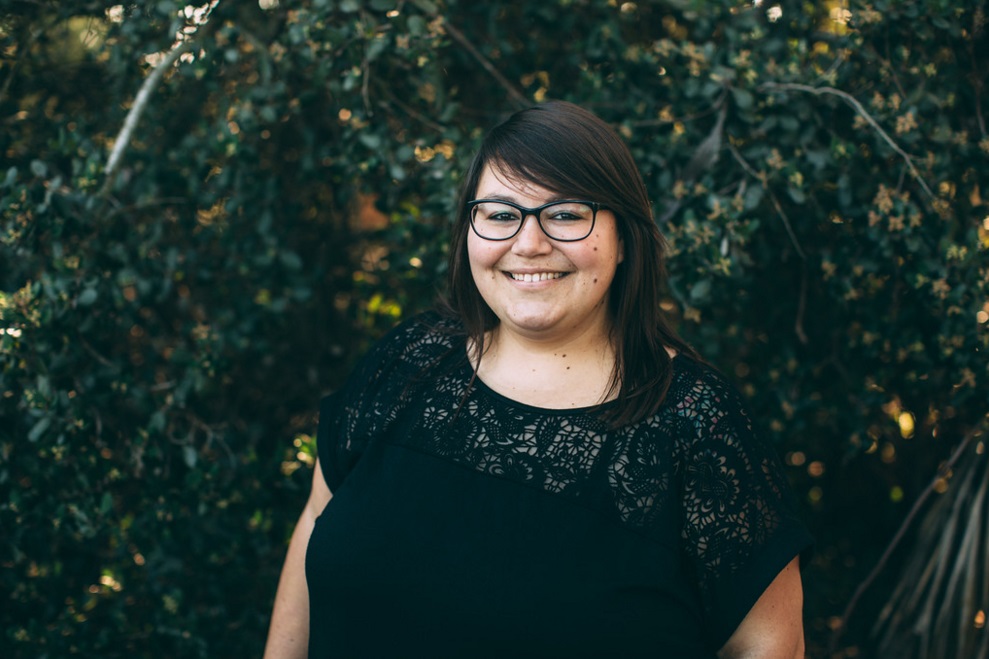
Kristin Hurley is currently pursuing her Bachelors of Arts in Music Therapy from California State University, Northridge, where her primary instrument is flute. Kristin has been actively involved in the community by volunteering as a music companion at Rady Children’s Hospital, Seasons Hospice of Los Angeles, various geriatrics facilities and at various elementary schools working with children with specials needs. Starting in 2009, when Kristin successfully completed the Music Together Teaching Certification developed by the Center for Music and Young Children, Princeton, New Jersey, her principal focus has been in Early Childhood Music. However, through practicum, Kristin gained experience in working with various populations such as; adults with traumatic brain injury, children with special needs including; autism, cerebral palsy and Down syndrome and adults with developmental and intellectual disabilities

Moving onto college, Kristin initially began to study the prerequisites for Nursing while taking a few music classes here and there. After just one semester of college and discovering the field of Music Therapy, Kristin decided to combine her love of music and her desire to heal. Kristin was determined to transfer to California State University, Northridge and study Music Therapy. Kristin’s first experience with music and children with special needs was in the cancer unit of San Diego’s Rady Children’s hospital. Kristin was invited to volunteer her time and music at the department’s monthly birthday celebration. Kristin had no prior experience to working with children with special needs but Kristin was over taken by her natural tendency to nurture as she lovingly brought the joy of music to the children of Rady Children’s hospital. It was after this experience that Kristin knew that music is for everyone and that she had found where she was meant to be.

“My love of music began about seventeen years ago when my aunt gave me my first flute and I began playing in my middle school band. The role that music played in my life began to transform into shaping who I am today. It is in music where I find strength, joy and healing and it is music, love and education that drives my passion to promote well-being in the lives of others.”

As my internship is drawing to a close, I’ve been thinking a lot about closure. There are plenty of different ideas on how to facilitate a closure session; you can write a song together about your experience making music in your sessions; you can record a video of you and your client playing a shared favorite song; you can even write a new song about the transition and how it might relate to that particular client.

In my experience with children with autism, change and transitions can be very difficult to process. Kids in general are not usually familiar with the concept of “internships”, as they have no need of that knowledge yet, so it’s not exactly easy to explain why you won’t be in the session two weeks from now. One of the biggest challenges I am currently facing in trying to provide adequate closure for my clients is having to say goodbye to the clients who took a long time to warm up to me. Now that we are both comfortable with each other, I’m already having to say goodbye.

An insight I feel I have gained is to highlight the positives in the situation. Remind them that yes, soon you won’t be in their sessions, but they are going to keep working on a certain song, or they get to keep doing one of their favorite activities in the future. This can help give them a sense of continuity, so they know that not everything is going to change. Also, you can pose it as a helpful challenge, that they have to “help out” their new (or returning) therapist who may not know about everything we’ve been working on. Encourage them to show how much they’ve learned or progressed by “showing it off” to the therapist taking over! 

It’s extremely important to document and communicate the important needs of your clients to the incoming therapist. With some clients, it might be very important to them to maintain a certain structure; some need to mix things up in order to keep sessions interesting for them. Some clients need specific kinds of prompting in order to avoid over-stimulation; some kids are flexible and will adapt to therapists working with them differently. In any situation, it’s important to not only document, but to also make personal notes on helpful hints and specific interventions that you can email or hand off to the therapist taking your place. 

-Toby


I never thought I could ever produce as many original songs as I have in the past few months! As music therapists, we are constantly writing and re-writing songs to fit different interventions for different clients and hitting a song-writer’s block is the last thing you want to deal with when planning your sessions. Our team recently discussed some important factors in writing songs for the clinic, or with certain clients in mind. Sometimes a child or adult needs a song slowed down, directions broken into simpler steps, or a different verse or element that pertains to their goals directly. It’s important to have some tips and guidelines handy for when you hit that wall in your creativity! 

Songwriting tips for the clinic:

  • Decide why you’re writing the song – what is the purpose? Educational? Movement? Language production? Keep your purpose and the client’s goal in mind while you’re writing
  • In “key phrase” songwriting, the phrase should melodically reflect the spoken pattern of inflection

o   Example: The melody line for the phrase “Can I have a turn please?” should be an ascending line, since in general speech questions are usually end in an upwards voice inflection

o   Remember that rhythmic pacing is more important than the melody, as shown in recent MT studies, so remember to keep the rhythm going even if the music stops (with left hand tapping, etc)

  • For movement/action songs, be sure to include clear cues for when to do the movement

o   Count down to the action (“3-2-1 Jump!”)

  • Write your idea in the middle of a page. Put an arrow out from it & put down your initial reaction to it. Do 3 or 4 arrows and develop the idea in a different direction. Stretch your imagination & your idea.

o   Great one for clients who are higher functioning cognitively and can explore their creativity with you there to guide and prompt them

  • Write the melody without an instrument! It should be easy to remember and sing, and hold up without the lyric.

o   Especially important when working on any interventions involving mnemonics, but just a good rule in general…if you can’t remember your own melodies easily (without instrumental accompaniment) how will the client?


Good luck with your songwriting endeavors, and remember to let your natural skills and creativity as a musician play a role in the process 🙂 

                      -Toby


PS. Just for fun, what do you think of Paste Magazines list of the 100 Greatest Songwriters of All Time?


MTCCA shared an acronym with me for how to write great goals for your clients.  It is simply this–be SMART.

  1. Specific: The action must be very specific in order for it to be measurable.  In order to do this, you must first determine their functioning level before therapy is begun so there is something to compare
  2. Measurable: This is the way to tell if clients are making progress
  3. Achievable: They must be able to achieve the goals or there is no point in setting goals at all
  4. Relevant: There is no point in working on something that is not relevant to the client
  5. Time Limited: You should set a specific date for when they should have a goal achieved, for example “by July 2015…”

Mary Jane

Eleven percent of children in the United States have been diagnosed with ADHD and 1 in 88 children have been identified with having autism.  People who have these diagnoses exhibit trouble with cognition, specifically with attention and inhibitory control.  So why use music therapy to help with attention?

  • Rhythm creates a temporal structure for neurons to fire
  • Rhythm creates an organized time frame, helps with learning and perception
  • Rhythm can create the right amount of predictability
  • Pleasant music increases blood flow to the basal ganglia and prefrontal cortex and decreases blood flow to the flight or fight response area in the amygdala

Below is an example of an ABA therapist working on joint attention with a child with autism.  Music therapists use similar techniques, but using musical instruments and songs.

Here is an example of a music therapist working on joint attention with a child.  You can also see how well the child’s attention is sustained while playing an instrument.  Playing an instrument is a great way for someone to practice and develop sustaining attention to a task as well as other types of attention and cognitive skills.

Mary Jane

Hello!

This is my first post as an intern at MTCCA and I’m excited to share with others the amazing things I’m learning about music therapy and the work that we do!

Today we were talking about speech and language development through music. Music is an amazing tool to help develop and enhance language skills of kids and adults of all backgrounds. Because of the inherent structural qualities in music, like tempo & rhythm, melody, and repetitions of sections or verses, our brains and bodies can quickly connect with what we are hearing, oftentimes without even thinking about it! One of the reasons the brain work so well in the context of music is because once we connect with a rhythm and structure of a song we can anticipate what is coming next and we want there to be a resolution to our anticipation.

Here is a cool example of anticipation in music lead by the multi-talented speaker and musician, Bobby McFerrin. Watch for what happens at the 38 second mark!

http://worldsciencefestival.com/videos/the_power_of_the_pentatonic_scale

Now, this example does not have to do specifically with speech and language, but it is a good example of how we respond to music when we are anticipating what should be next. Because music is fun and engaging for so many individuals, they are motivated to work to keep the music or the singing going. So for a child who is engaged in music making, but has difficulties with speech or language, we will often sing a line or phrase they know well except for the last word and pause the music until they verbalize that target word, then the music continues. For example, “Up above the world so_____, like a diamond in the _____,” and so on. This prompt is very basic, but it can work as a foundation for children who are learning how and when to give appropriate responses, producing accurate articulation, making eye contact and watching for cues, and so much more!

That’s my realization of the day! Stay tuned for more interesting thoughts and information about music therapy in our next post!

-Michelle “Toby” Tobias

When teaching music lessons to those with special needs, it is important to be able to adapt to each of their individual needs and to be understanding of the ways they learn best.  Here are some tips for teaching adapted music lessons:

  • Put yourself in their shoes, learn as much as you can about their diagnosis so that you can think like they do
  • Be precise and detailed in your instructions, some students can take things very literally and do not generalize, so be careful of idioms or terms that could be confusing
  • Use a routine with order and repetition, you can list out what you are going to do in the session
  • Be consistent, with the way they do things at home, with what is in their IEPs, etc and if you are preparing for a recital then you may need to help prepare them for several weeks in advance.  The more they feel comfortable, the less you will have acting out behaviors
  • Adapt and be flexible, you may need to work on left and right hand with them first on a drum or by throwing balls, they may need breaks if they are having a melt down
  • Set expectations, make sure you are setting high enough expectations, have them perform in the same recital as typical students
  • Have patience
  • Have compassion
  • Have a sense of humor, find ways to make lessons fun for them

Mary Jane

What is the Transformational Design Model?
Also known as the TDM, the Transformational Design Model is an assessment procedure that is used by many music therapists. There are a series of steps that the therapist goes through as they are assessing the client that ends in determining goals and interventions that are best for that client. It is a system that basically translates scientific methods into real-life functional use. It helps music therapists take non-musical therapeutic exercises and turn them into musical exercises, and then take those exercises and turn them into real-life every day skills that are functional.
Why is it important in the practice of music therapy?
-Helps plan goals that are relevant to the clients’ needs
-Helps make sure the goals and objectives are musical
-Helps generalize interventions into everyday functional application
-Allows music therapists to work with and share with other therapists
-Ensures patient centered instead of discipline centered programs
-Give clients quality service

Mary Jane


As my music therapy internship is coming to an end I have been establishing closure with more and more of my clients. Many families of clients have expressed gratitude, appreciation, and even sadness to see me go. I hadn’t actually realized how much of a partnership I had established with some of these families, which is a large part of the therapist/client relationship.

That’s something we weren’t exactly taught in music school. They teach us how to work effectively with many different populations, but they don’t teach us very much about interacting and connecting with the families of clients. In early childhood education, when a teacher establishes relationships and partnerships with families, the child’s learning is enhanced. This goes the same for music therapy. When there is a strong connection between the family and therapist, the child’s experience is enhanced, and this internship has certainly taught me that.

Well, it’s been a wild ride. I’ve learned many things about music therapy and life in general. I’ve experienced many things, a lot of which I never thought I would experience. And I can now say with certainty: I am ready for the professional world. Here I come!

As my music therapy internship is coming to an end I have been establishing closure with more and more of my clients. Many families of clients have expressed gratitude, appreciation, and even sadness to see me go. I hadn’t actually realized how much of a partnership I had established with some of these families, which is a large part of the therapist/client relationship.

That’s something we weren’t exactly taught in music school. They teach us how to work effectively with many different populations, but they don’t teach us very much about interacting and connecting with the families of clients. In early childhood education, when a teacher establishes relationships and partnerships with families, the child’s learning is enhanced. This goes the same for music therapy. When there is a strong connection between the family and therapist, the child’s experience is enhanced, and this internship has certainly taught me that.

Well, it’s been a wild ride. I’ve learned many things about music therapy and life in general. I’ve experienced many things, a lot of which I never thought I would experience. And I can now say with certainty: I am ready for the professional world. Here I come!