

logo

Drop us a Line

info@themusictherapycenter.com

autism Tag

During my internship, I was honored to be invited twice as a featured musician and music therapist at Casa de Mosaic’s Adapted Story Time. Casa De Mosaic is an amazing non-profit in San Diego county whose mission is:

“to provide specialized training opportunities to adults with autism and other developmental disabilities requiring extensive support, particularly those facing significant language impairments and behavioral challenges.”

Adapted Story Time creates a supportive and inclusive space specifically designed for individuals with autism, helping them build social skills and feel a sense of connection and belonging.

Sessions typically include themed storytime led by a librarian, followed by a related craft or activity. Some sessions are also led by music and speech therapists, offering added opportunities for engagement and learning. Each session incorporated familiar songs, rhythmic activities, and opportunities for participants to contribute their own ideas. One example of an intervention I used at Adapted Story Time, was a friendship intervention. The book that was read was “What is a friend, and how do I possibly make one?” 

This book was all about how to be a good friend to others, and how you would want to be treated. After a hello song with the group, I asked what it meant to be a good friend. A participant raised his hand and said “to treat others how you would like to be treated”. I agree! That comment perfectly led us into our song “Count on Me” by Bruno Mars. Participants sang and filled in lyrics when prompted by the therapist.

I witnessed beautiful moments of connection as participants clapped, sang, and moved together, demonstrating the profound ways music can enhance storytelling and community.

What made these visits especially meaningful was the emphasis on choice and empowerment, participants were encouraged to lead, express, and celebrate their unique voices. The experience challenged me to balance structure with spontaneity, creating a welcoming space for creativity and joy.

These group sessions are a powerful example of how music therapy can extend beyond clinical goals to foster artistic expression and social inclusion. I am grateful for the chance to contribute to their community and inspired to continue exploring such collaborative, person-centered approaches in my career.

Amelia Elbendary

Every week, interns and newer team members participate in a topic-focused, supervisor-led symposium. Over the course of my internship, I have had the pleasure of engaging in meaningful conversations and discussions about our various client populations, musical and non-musical techniques we can use in session, how we can improve our therapeutic skills, and different experiences that we have had working with our clients. One of my favorite topics that we have discussed in Symposium is Temple Grandin and her book, Thinking in Pictures

I had previously heard about Temple Grandin in high school, but never took the time to learn about her and the astounding literature, speeches and research that she has been a part of. Thinking in Pictures shares Temple’s insights into her visual thinking process. She describes how she processes words as vivid mental images, comparing her process to a VCR tape constantly playing in her mind. Her testimony has helped me open my mind to consider the diverse processing styles of my own clients and how I can adjust my approach to better suit or accommodate their needs. 

In her chapter, Autism and Visual Thoughts, she writes about her incredible process of designing complex livestock machinery, primarily through mental visualization. She explains how she mentally referenced previous livestock designs that she had studied, and how she built and tested these designs in her mind before bringing them into a physical form.

“When I do an equipment simulation in my imagination or work on an engineering problem, it is like seeing it on a videotape in my mind. I can view it from any angle, placing myself above or below the equipment and rotating it at the same time. I don’t need a fancy graphics program that can produce three-dimensional design simulations. I can do it better and faster in my head” (Temple Grandin, Thinking in Pictures, 2006). 

Her visual processing method not only highlights the fascinating possibilities of a visual thinker, but also emphasizes the importance of playing to someone’s strengths when working towards a specific goal. 

Reflecting on her chapter, I feel more educated on visual processing and incorporating various visual aids for my clients. This could include physical lyric sheets, physical music scores, adapted music lead sheets using shapes, numbers or images, or even giving clients the space to draw or map out what they see when engaging in a session. 

Grandin’s emphasis on the value of different thinking styles also inspires me to advocate for a broader incorporation of learning styles and processing styles within my therapeutic practices. I feel that creating space for different or unique processings of each client can foster a more enriching and supportive therapeutic relationship and environment.

In conclusion, Temple Grandin’s Thinking in Pictures serves as a powerful reminder of the diversity across human cognition. As a music therapy intern, embracing this diversity by adapting my methods to accommodate various thinking styles will enhance the efficacy of my sessions but also honor the individuality of each client I have the opportunity to work with.

  • Mia Falcon

Greetings, everyone- welcome to another blog post! 

I would love to share with you all a cool opportunity that occurred a few weeks ago, as well as some information about a few of our clients that I have the privilege to work with. On October 5th, we had the honor of going to the Autism Speaks Walk San Diego! In addition to that, some of our clients are in bands that The Music Therapy Center facilitates, and these bands got to perform on stage at the walk!

The walk was truly heartwarming and touching. One really special part from the morning was everyone gathering around together by the stage, and the emcee, Little Tommy gave special shout outs to all of the individuals that are either diagnosed with autism, or people who have family members and friends with autism. This was really special to see a sea of people who have come together for the same reason: to empower and celebrate individuals with Autism, and to look at the strengths that they hold instead of the “disabilities” part that people tend to focus on. A lot of Banding Together’s Jam Session members also were able to come up on stage and help us sing and dance right before this, which also made it very special! 

That being said, once a week, I have the opportunity to help facilitate a rock band that consists of four of our young adults with autism. We have a vocalist/keyboard player, an electric guitarist, a saxophonist, and a drummer. These four individuals are incredibly bright and talented individuals, each with their own big personalities. These clients never fail to make me smile and laugh every time I see them! For the past few months, we have been working on writing and performing an original blues song, and they were able to premiere that song at the walk! This was a huge step for them, as every person got a turn to improvise during the blues song. 


One of our goals as clinicians is for them is to step outside of their comfort zone and their box, because for individuals with Autism, getting stuck inside a routine and their own cycle can happen frequently. A lot of the times, The Kingsmen desire playing a song from top to bottom the same way every time, especially if the song is a cover, it has to sound exactly the same. Our goal with The Kingsmen Blues was to empower them to improvise and to let their own individual musicality and personality shine with their solos. Our electric guitar player was really excited to tell us that during his solo, he moved closer to the stage and went for it, because he has seen rock stars do that before, which was such a great thing for him! 

This event just made me realize even more how much talent and potential all of these individuals in the band have, and sometimes for them to reach their full potential, you may have to push them outside of their comfort zone. Even if they resist and may not like it at first, it can really help their confidence and self esteem, and they can learn a lot about themselves and improve as musicians as well. 

I’d love to hear from you! If you give adapted lessons, what are some of the ways you empower your clients to step out of their comfort zone? 

See you in the next post!

-Juliana Hsu

We had a blast this morning at the Autism Speaks Walk! I cannot imagine a better way to spend my last day of internship. It was an honor to join in with this amazing community, advocating for individuals with autism. Moreover, it was an honor to perform on stage with The Kingsmen, The Yakety Yaks, and members of the Jam Session program. These talented teens and young adults showed me and everyone at the walk what it looks to overcome stage fright, to work hard, to be an amazing team member, to be proud of your accomplishments, and to HAVE FUN!

Check out these awesome musicians!

IMG_7466.jpg

  • Chiara


Your body is always touching SOMETHING. What an interesting thought that most people don’t spend too much time dwelling on. That’s because the brain with a well-regulated tactile sense only briefly makes note of the thing that the body is touching, and then ignores it in favor of more important thoughts and sensations it needs to process. But for a person whose tactile sense is out-of-sync, the textures of certain fabrics or presence of a tag on their clothing may be a source of extreme discomfort and the cause for much distress. Or they may lunge at you for a bear hug because they crave the feeling of deep pressure squeezes. Or they may not seem to notice that their hand is on a hot pan until they have a third degree burn. These are only a few examples, of course. The main point is, our tactile sense helps us determine what we are touching and if the things touching us at every moment of every day are harmful or helpful. An out-of-sync tactile sense may make a person overresponsive to stimuli, underresponsive to stimuli, sensory seeking, or a combination of these, or may make it difficult to determine what the tactile stimulus is or where it is touching.

How does this affect my work as a music therapist? I can start by considering the environment of my treatment space. What is the client’s reaction to the texture of the chair he/she is sitting in? For some of my clients with tactile sensory needs, sitting on a fuzzy pillow that buzzes provides the tactile sensations they need to be aware and in control of their bodies. For other clients, sitting on a rubbery and bumpy cushion serves this same purpose. What is the client’s reaction to the carpet? I have clients who prefer to have their shoes off during sessions. One such client likes having the afore mentioned rubbery cushion under his feet. From which direction is the air conditioning blowing and is it blowing directly on my client? I’ve barely scratched the surface of tactile elements to consider in the environment of the treatment room, but you get the picture.

child-playing-with-rice.jpg

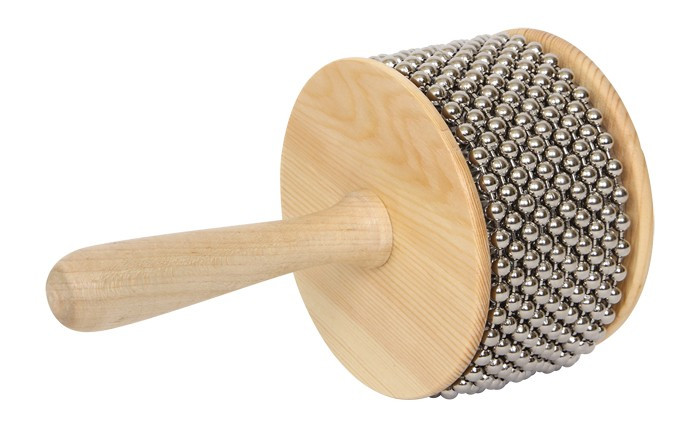
What about my choice of instruments I use with my clients? Does the client seem to want to touch textured things? I have many clients who are more engaged in our interventions when they play an instrument like the cabasa (picture below), which allows them to rub their fingers along the bumpy beads. Other ideas of instruments with great sensory feedback are guitar strings, chimes, hand drums, ocean drums, and resonator bells. The cabasa is one of my favorite instruments because it acts as a great massager, providing sensory input to arms, legs, backs, and soles of feet. For clients who are seeking tactile sensory stimulation, instruments like the cabasa can provide this in an appropriate way. Encourage the client to play the cabasa (or other instrument) and use it to provide sensory input independently. This way, the client is learning to self-regulate his/her out-of-sync sensory systems.


3317_cabasa_a.jpgOr for clients with an overresponsive tactile sense, choose instruments that don’t have a rough or uneven texture. Then encourage them to explore tactile sensations using the texture and vibrations of various instruments. This could help reduce defensiveness to certain tactile sensations.

Tactile_Sensory_Kit_6.jpg

As with all other sensory systems, there are so many things to consider when your child or client has an out-of-sync tactile system. Hopefully the ideas and considerations discussed here have sparked some ideas and increased your awareness of needs related to the tactile sense. Now, I challenge you to stop every now and then and become aware of the sensations on your skin and the things touching your body. Then imagine what it would be like if you could not seem to get enough of or control one of these sensations. How would you fix that?

-Chiara

We all know those kiddos – even when they are (miraculously) sitting in their seat for more than 2 minutes at a time, they’re still squirming, sliding down in their chair or moving their body side to side.  They are constantly seeking to interact with their environment.  Or maybe you can relate to leading groups every week and feeling the urge to bring in something new and different for the clients to experience other than instruments.  Lucky for us, the world of Neurologic Music Therapy has an answer in 4 simple letters: MSOT.  Musical Sensory Orientation Training.

Thaut, in Rhythm, Music and the Brain, describes MSOT as follows:

“Musical Sensory Orientation Training (MSOT) is the use of music, presented live or recorded, to stimulate arousal and recovery of wake states and facilitate meaningful responsiveness and orientation to time, place, and person. In more advanced recovery of developmental stages, training would involve active engagement in simple musical exercises to increase vigilance and train basic attention maintenance with emphasis on quantity rather than quality of response (Ogata 1995).”

Let’s all say it together now: MSOT is my friend!  It is so important to ensure that our clients are learning to self-regulate and getting the sensory input that their bodies crave.  Sensory integration is a neurobiological process that refers to the integration and interpretation of sensory stimulation from the environment by the brain.  Individuals with developmental disabilities often have either over- or under- reactive sensory systems, which can mean sensory input from the environment is not being organized properly in the brain.  This makes the sensory experiences we as music therapists provide for them particularly important.  Below are several MSOT strategies I’ve recently been exploring with clients – the possibilities are endless!

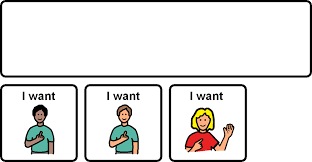
  1. Cabasa – I never understood the power of the cabasa until internship.  It is an easy way to take a sensory “break” while keeping the music and instruments going throughout the activity.  For my non-verbal clients I use a simple “I want ____” visual and have them choose a body part (i.e. hands, arms, legs, back) for where they want the cabasa.  You can make up a simple song or chant about where you’re playing the cabasa and use a background loop to free up your hands to provide that input for the client.  You can also use this same format but instead give deep pressure squeezes and simply substitute the lyrics to “I like squeezes on my arms”.

I want visual

2. Therapy Ball – I love using the therapy ball because it’s a great way to incorporate sensory integration into whatever intervention you’re working on (like Bi-lateral drumming).  This targets the the Proprioceptive System – helping our clients understand where their body is in space.

3. Get Creative – Have fun with exploring MSOT strategies!  For adult groups, my co-intern and I have been enjoying bringing in essential oils (stimulating olfactory system), fun themed props for Spring Holidays (tactile), instruments like chimes, cabasa, and drums, bubbles, scarves, and scented squeeze balls.  I hope you’ll find that this brings a fun, novel element to your groups.

Music making (with an instrument) naturally stimulates 3 out of our 5 senses (auditory, tactile, and visual).  If you can add some type of olfactory element, we have 4 out of the 5 covered – a great goal to aim for while session planning.  It’s great to have a variety of MSOT strategies in your tool-belt in order to adapt to what your client needs in the moment – get creative and have fun with it!

-Marissa

banding together secret show

Banding Together’s Jam Sessions provide youth with special needs with an opportunity to come together for a one-hour jam session where we play drums, sing songs, dance and have a great time with friends. After EVERY Jam Session, I leave feeling completely inspired, full of enthusiasm for life and a heart full of love and appreciation. I always feel incredibly grateful to be involved with this organization but I also feel the desire to share it with others. I want everyone to know how amazing these youth are and how music therapy allows them to shine at their brightest.

On February 12th, 2016 that desire to share with others became a reality. Banding Together was recognized by professional skateboarder/snowboarder, two-time Olympic gold medalist Shaun White and his band Bad Things! We were invited to a secret show by Bad Things, sponsored by San Diego’s local radio station 91X. We all arrived and got to hang out with the members of Bad Things, rock out with them, take pictures with Shaun White and just plain ol’ have a good time. The best part of it all was getting to see the Jam Session participants in an inclusive environment, thrilled by this unique and exclusive opportunity just for them

When I started internship, I had no idea that I would get to hang out with the coolest people ever and get to go to events with celebrities sponsored by radio stations! Every week I get to jam and hang out with the best of the best! This is definitely one of my top internship highlights.

-Kristin

Today we discussed the different ways people think. Most people have a certain way they think and learn, whether it be visually, verbally, or in patterns. It is vitally important for teachers and therapists to understand and recognize these different kinds of thinking so that we can support the child’s needs and foster their abilities, rather than training them to think differently. 

Temple Grandin is a world renowned author and advocate for those with Autism. She has her Ph.D in Animal Sciences and is a professor at Colorado State University, and she is diagnosed with Autism. I highly recommend reading her article “Thinking In Pictures” where she talks about her style of thinking, how she came to understand it, and how she now uses it to her benefit. In her article, she outlines the 3 types of thinking in the specialized brains of those with autism.

  1. Visual thinkers, like me, think in photographically specific images. There are degrees of specificity of visual thinking. I can test run a machine in my head with full motion. Interviews with nonautistic visual thinkers indicated that they can only visualize still images. These images may range in specificity from images of specific places to more vague conceptual images. Learning algebra was impossible and a foreign language was difficult. Highly specific visual thinkers should skip algebra and study more visual forms of math such as trigonometry or geometry. Children who are visual thinkers will often be good at drawing, other arts, and building things with building toys such as Lego’s. Many children who are visual thinkers like maps, flags, and photographs. Visual thinkers are well suited to jobs in drafting, graphic design, training animals, auto mechanics, jewelry making, construction, and factory automation.
  2. Music and math thinkers think in patterns. These people often excel at math, chess, and computer programming. Some of these individuals have explained to me that they see patterns and relationships between patterns and numbers instead of photographic images. As children they may play music by ear and be interested in music. Music and math minds often have careers in computer programming, chemistry, statistics, engineering, music, and physics. Written language is not required for pattern thinking. The pre-literate Incas used complex bundles of knotted cords to keep track of taxes, labor, and trading among a thousand people.
  3. Verbal logic thinkers think in word details. They often love history, foreign languages, weather statistics, and stock market reports. As children they often have a vast knowledge of sports scores. They are not visual thinkers and they are often poor at drawing. Children with speech delays are more likely to become visual or music and math thinkers. Many of these individuals had no speech delays, and they became word specialists. These individuals have found successful careers in language translation, journalism, accounting, speech therapy, special education, library work, or financial analysis.

You can read the full article here: http://www.grandin.com/inc/visual.thinking.html

I also recommend watching her TedTalk about different kinds of thinking and how individuals with highly specialized ways of thinking should be encouraged to pursue their abilities rather than being held back because of the unique way they think and learn.

[ted id=773]


While it is extremely important for us to teach children useful, everyday skills, as well as functional social skills, the first step in reaching a child with special needs is recognizing how they process, retain, and express information. Once we are able to identify that, we can work with them to adjust how they cope with difficult situations, teach them how to express their thoughts and emotions, and help them become independent individuals.

It is an interesting exercise to take some time to identify how YOU think and learn and how it effects your daily life! Give it a try! 

Til next time,

Toby

Eleven percent of children in the United States have been diagnosed with ADHD and 1 in 88 children have been identified with having autism.  People who have these diagnoses exhibit trouble with cognition, specifically with attention and inhibitory control.  So why use music therapy to help with attention?

  • Rhythm creates a temporal structure for neurons to fire
  • Rhythm creates an organized time frame, helps with learning and perception
  • Rhythm can create the right amount of predictability
  • Pleasant music increases blood flow to the basal ganglia and prefrontal cortex and decreases blood flow to the flight or fight response area in the amygdala

Below is an example of an ABA therapist working on joint attention with a child with autism.  Music therapists use similar techniques, but using musical instruments and songs.

Here is an example of a music therapist working on joint attention with a child.  You can also see how well the child’s attention is sustained while playing an instrument.  Playing an instrument is a great way for someone to practice and develop sustaining attention to a task as well as other types of attention and cognitive skills.

Mary Jane