logo

Drop us a Line

info@themusictherapycenter.com

Internship experiences

Even though in some ways the 6 months felt like it flew by, I have learned so much it can be hard to put it into words, or even recognize some of the changes because my learnings have become so much a part of my daily routine as a music therapist. Below I am sharing just a few of my learnings:

I’ve learned through this internship that I have a unique ability to personally connect with others and this is also one of the parts of being a music therapist that I enjoy. I have always been interested in a career where I get to help others find success and that was one of the main reasons why I was so interested in working with students with special needs. I have also found through this internship that I am not only interested in working with people with disabilities but also older adults with memory impairment. Part of helping to guide a person’s successes is getting to know them or their family members and what their goals are. Being able to find what they respond to best is important and is a skill that I have seen grow during my internship. I feel more confident creating individualized interventions for clients, and I now have the techniques to adapt in the moment when necessary.

Secondly I have been excited about how much my repertoire has grown throughout this internship. Because I have had the opportunity to work with clients of different diagnoses and varying ages I have at least started to dip my toe in many genres of music, which I think will help me as I continue on my journey. During college classes we often had to memorize songs for tests or for practicums and I was able to do it, but I found in my internship that this skill became easier because I was using the songs I wanted to memorize on a daily basis and I felt much more successful. This skill is important because it allows the therapist to fully connect with the client and not be distracted by looking at the music or trying to remember what chord comes next. Especially in a group setting it is helpful to have music memorized because then the therapist can have more opportunities to connect with each client on an individual basis, which allows for the therapist to move around the room more. I realized about 4 months into my internship that this skill was improving and it was very encouraging me to see my progress from the beginning of my internship.

It is sometimes hard to articulate all the progress I have made, but I am so thankful for an internship where I was able to learn so many different aspects of being a music therapist.


Emily


These past 6 months have been a blur of learning experiences! It is so hard to narrow down what my top “learnings” have been because I have learned so incredibly much. I am not remotely close to the therapist I was 6 months ago, and thank goodness for that! I’ll try to synthesize the top 2 areas in which I have noticed the most growth in myself.

  1. Confidence! If you had told me 6 months ago that I would reach the point where I would feel confident in my ability to facilitate therapeutic change for a client within a session, I would have laughed in your face. Now, confidence does not mean I have the impression that I’m done learning and improving. I still have so much to learn! But this confidence means that I am no longer feeling floods of self-doubt when I enter my sessions. I no longer feel like I need to script and plan out every second of my sessions. Confidence means I’m finally to the point where I can trust my instincts. When I’m trusting my instincts, I can be myself. And when I’m myself, the client benefits from a more authentic therapeutic relationship, which leads to faster learning and goal achievement!
  1. As it turns out, I can teach! I had never thought of myself as a very good teacher. These past 6 months, I have been put in many many MANY teaching situations, from adapted piano and guitar lessons with children and teens to teaching the Clavinova (read: electric piano) to older adults. Initially, I was TERRIFIED by the idea of having to teach. And many times I felt I was just stumbling through each lesson. So, of course, I was amazed when my older adult students told me that I explained things very well and that they were able to easily understand my instructions. Now, I am no longer terrified of teaching. What’s more, I may even ENJOY it sometimes! I think this speaks volumes to the amount of practice I’ve had over the last 6 months, trying to relate to each one of my students in their unique learning styles, and breaking information down into small pieces. I’m grateful that I can walk away from this internship knowing that I developed a skill a never thought I had or would have

It’s been a wild learning ride, and the above to learning areas are just the tip of the iceberg. I am SO grateful for this experience and for the tools it has given me to become a more successful therapist.

  • Chiara

We had a blast this morning at the Autism Speaks Walk! I cannot imagine a better way to spend my last day of internship. It was an honor to join in with this amazing community, advocating for individuals with autism. Moreover, it was an honor to perform on stage with The Kingsmen, The Yakety Yaks, and members of the Jam Session program. These talented teens and young adults showed me and everyone at the walk what it looks to overcome stage fright, to work hard, to be an amazing team member, to be proud of your accomplishments, and to HAVE FUN!

Check out these awesome musicians!

IMG_7466.jpg

  • Chiara


Before starting my internship, I was required to read a book called Who Moved My Cheese – a story about dealing with changes in life. We recently revisited the book and discussed some of the metaphors and lessons in it. This seems fitting, as my internship is almost finished now, and it’s time to start facing the next big life change: entering the professional world.

The book uses cheese as a metaphor the status quo/what makes us feel comfortable/our purpose/our current relationships/etc. Eventually, the cheese is consumed, as cheese is meant to be. We’re then faced with a choice: do we go out looking for new cheese (i.e. do we change with the changes) or do we stay put, mistakenly expecting our old cheese to reappear? Then, if we choose to change with the changes and go out looking for new cheese, what happens when we don’t find it when and where we expect?

I remember when I was first reading this book. I was anticipating starting my internship with the Music Therapy Center, and very grateful that the life change that I had been anticipating for the previous 4 years was finally happening. But the process of getting an internship had not gone as planned at all. In the end, it was clearly for the best. But in the 8 months before being accepted into the internship at MTTCA, as I repeatedly couldn’t find my new cheese, I became discouraged.

I applied to 5 internships initially, and thought for sure someone would offer me cheese! Four rejected me and one discontinued their internship before my application even got to them. My neatly laid out plan and timeline for where and when I would find my much-anticipated new cheese was useless. I had to start the search all over again.

I’m sure glad I didn’t stop looking for my cheese! The next round of 4 applications brought me two cheese (read “internship”) offers, in an area of music therapy I had not originally considered. And as I sit here typing this blog post, I’m filled with overwhelming gratitude for how perfect this cheese has been for me. It has helped me discover and shape my life calling and dream. Not only that, but it has also built in me invaluable skills, given me beautiful friendships, and equipped me to pursue my own potential just as we strive to help our clients pursue theirs.

The moral of this cheese story is that even when you’re anticipating the end of your cheese, there may not be new cheese where you expect it. You have to keep searching, maybe trying new routes and new angles. Maybe try looking for a different type of cheese – maybe you need to look for gouda instead of brie. This moral is a good one to reflect upon as I start looking for my new cheese (read “job”). It may not be where I expect it to be, and it may not be the type of cheese I think it should be. But, just like this internship, it will be exactly what I need.

  • Chiara

What a journey the past 6 months of internship has been!  One year ago at this time I had no idea I would be moving to San Diego and building a life here.  I had no idea how intense life as an intern would be or how exciting the process of stepping out of the intern shoes and stepping into life as a new professional would be.  These past 6 months have taught me patience, confidence, and what it means to be invested in your dream.  There have been many lessons I’ve learned throughout internship, and I did my best to summarize my top learnings below.

1.      Your therapeutic relationship with the client is most important
While this may seem obvious, it was a valuable lesson I was reminded of through my experience as an intern.  So often it’s easy to jump into sessions with clients and get so absorbed in the goals and interventions that you forget that you haven’t yet earned the client’s trust.  The therapeutic relationship is really what makes music therapy effective – it is 100% essential to the clients success within therapy.  With time, I learned to breathe, be more present, be more aware of the client’s responses/what they are giving me and became comfortable adapting in the moment.  I also learned a great deal about building rapport with a wide range of personalities and different individuals.  Some clients connect with you through silliness/cutting loose a bit, some through structure, and others simply with time.  I learned to get to know my client’s and give the relationship time to grow before expecting them to trust/listen to me.

2.      Importance of professionalism and communication with parents/families
My experience in the field so far has taught me the vital importance of professionalism and communication.  I value clear and open communication and have come to understand how important this is in the workplace.  I have learned to communicate clearly with parents and families and (when possible) always keep them in the loop.  Within this lesson, I learned the importance of consistency, timeliness, and honesty/transparency as a measure of communicating respect and professionalism to the families with which you are working.

3.      Know your professional values
I have held several jobs in music therapy since beginning my degree.  Each has taught me more and more about what I value as a professional.  Sometimes the administrative end of music therapy can be equally as important as the therapy itself.  Sometimes small, logistical details determine whether you will be happy and well balanced, or overworked and burnt out.  I am learning to advocate for myself in these areas as well as cultivate a reputation for myself based on my personal values as a music therapist.

4.      Actively build/expand your skill set
There is always room for improvement, or as my mom told me often growing up “Learning is a lifestyle”.  I realized throughout internship how easy it is to get into a groove or routine where you’re comfortable, you and your clients know the drill and you rarely feel the need to mix it up.  However, mixing it up is where you’re challenged and where you grow!  I am inspired to expand my skills (particularly on guitar) as well as my repertoire of music.  Because we are in such a unique and fun line of work, it is a joy to get to be creative every day in the way you lead songs, present information, and address goals.

5.      Love where you are –> trust the process
The universe kept hitting me hard with this lesson, especially throughout internship, until it started to begin to scratch the surface of making it’s way into my head.  Many times we wish we were someplace we’re not – gotta learn to love and accept where we are.  Even if I don’t have years of experience (one day I will!) or am not the most knowledgable on certain subjects, I have to remind myself to breathe and accept where I am and be gracious with myself.  This proved to be particularly tricky when dealing with families or facilities who also wish you had more experience than you do.  All in time, all in time.  The difficulties will pass, the knowledge and expertise will come with experience, just trust that you are where you need to be.  I am where I need to be.

While reflecting on these lessons, I was drawn to record a piano piece that in a way represents the ebb and flow of internship for me.


Here’s to the future and all that lies ahead!

-Marissa

Behavior serves a function.  From infants to the elderly, humans behave the way they do for a reason.  When it comes to our clients, addressing the reason can sometimes be the first step towards making progress in their goal areas.

Recently in symposium, Shannon Wallace and Maryann Le of AEFCT came to present to our staff on “Function of Behavior Training”.  (Find out more about AEFCT here: http://aefct.com/)  Their presentation opened my eyes to several important factors to consider while working with clients.

A key concept in knowing how to address the behavior of a client is understanding the function of the behavior.  I learned that this is a phrase commonly used amongst behavior therapists that basically answers the question: why is the client doing what they are doing?  Is their behavior seeking to gain the attention of somebody or to meet a physical need (are they hungry.. thirsty.. need to use the restroom)?  What is their specific purpose for what they are doing?  Sometimes this can be a very tricky question to answer.

Consider the fact that many of the behaviors we as therapists view as “challenging” are behaviors the client probably views as functional, because engaging in them gets their needs met in one way or another.  Maybe screaming at the top of their lungs in the store gets them the toy they wanted (mom gives in to alleviate the situation).  Maybe engaging in disruptive behavior in the classroom gets them out of doing difficult work (they are removed from classroom for disciplinary purposes).

The 3 functions of behavior are:

  1. Positive reinforcement (behavior produces an outcomes that is desired by the child)
  2. Negative reinforcement (maladaptive behavior like escape or avoidance)
  3. Sensory Regulation (maladaptive behavior occurs in order to regulate the level of input from environment)

First determining the function of behavior helps us understand how to appropriately address it.  According to Shannon and Maryann, “When we know the antecedents and consequences of behavior, we can intervene in ways that provide an appropriate behavior that achieves the same function.”  This was one of the biggest lessons I learned through this presentation: the importance of providing an appropriate alternative to undesired behavior.  Since this time, I have been applying this principal in many of my sessions.  This includes things like redirecting a client who hits the table vigorously with his palms to playing a drum in order to receive that sensory feedback as well as redirecting a client who constantly asks what’s next by helping them give positive compliments to other group members.  Always be thinking how you can provide clients with a functional, appropriate alternative.

One final important aspect to consider is being on board with the parents with your strategies and approach towards behavior.  It is important that you are handling the behavior in a way that is congruent with how the parents are handling it at home.  Although this is not always possible, when it is, it can be extremely effective for the client.  Discuss strategies and approaches with your client’s family in order to determine what is best for them.

I’ll leave you with a short story of how these ideas have manifested themselves over the past month of my internship.  I have been working for 5 months with a non-verbal 8 year old client who, ever since I started with him, will manage to have a handful of my hair at some point in almost every session.  I have worked so hard on developing my “mom” voice, being stern, changing my affect, letting him know that is not okay, singing songs about having “gentle hands” and practicing what that looks like, redirecting him to a drum or other instrument or ignoring the behavior.  Although some of these tactics have seemed to work in the moment, we had a session 2 weeks ago where we were in the middle of an intervention at the piano together and I felt like we were connecting more than we ever have – he was sustaining eye contact, following directions, smiling at me – we were communicating so much nonverbally to each other through our playing.  I look down at him and he’s smiling so huge and then suddenly he reaches out and grabs two handfuls of my hair.  In this moment I realized that my assessment of the function of his behavior may have been off all along – maybe the reason he is engaging in this behavior is because he wants to communicate something to me and doesn’t have a way to do so.  I didn’t struggle against him or whip out my stern voice and say “not okay”, I instead maneuvered my head so that I could make eye contact with him and just looked at him with a neutral affect, locking eyes – simply letting him know I was there and present with him.  After a moment, he let go, no words were said and we continued with the intervention.  Since this time, I have been motivated to give him absolutely every opportunity to make a choice, communicate with his device, and request activities in an attempt to provide him with a means to communicate whatever it was he was trying to say by grabbing my hair.  Through my clients I am learning countless lessons about the function of behavior, communication and human connection.

-Marissa
 

This weekend marked a celebration – many friends gathered together to share in the joy of Reid Moriarty and his family over the completion of Reid’s newest album, “Shine”.

Shine album

Reid has been a client of Angela’s at The Music Therapy Center for many years and several of the songs from this album were ones they wrote together (with the help of many other talented musicians!)  It is a worship album that tells a beautiful story of the hope, joy, and fulfillment that Reid has found in God.  Over 14 musicians came together to be a part of this project – from writing the songs, to recording in the studio, to mixing the finalized product – and had the privilege of celebrating the end result at yesterdays “Listening Party”  hosted by the Moriarty’s.

Reid at listening party

Listening Party fun Shine

I have had the pleasure of working with Reid during my internship and am constantly amazed at his creativity, genuine care for others, and love of life.  He will make your day with just a few words, guaranteed!

If you’re interested in buying Reid’s album as well as learning about any of his upcoming gig’s and other projects, please visit: http://www.reidmoriarty.com/

Reid, you are truly an inspiration and I’m so grateful that I came to know you during my time at MTCCA.

Keep on shining!

Reid Allie and Marissa.jpg

-Marissa

Jam session.jpg

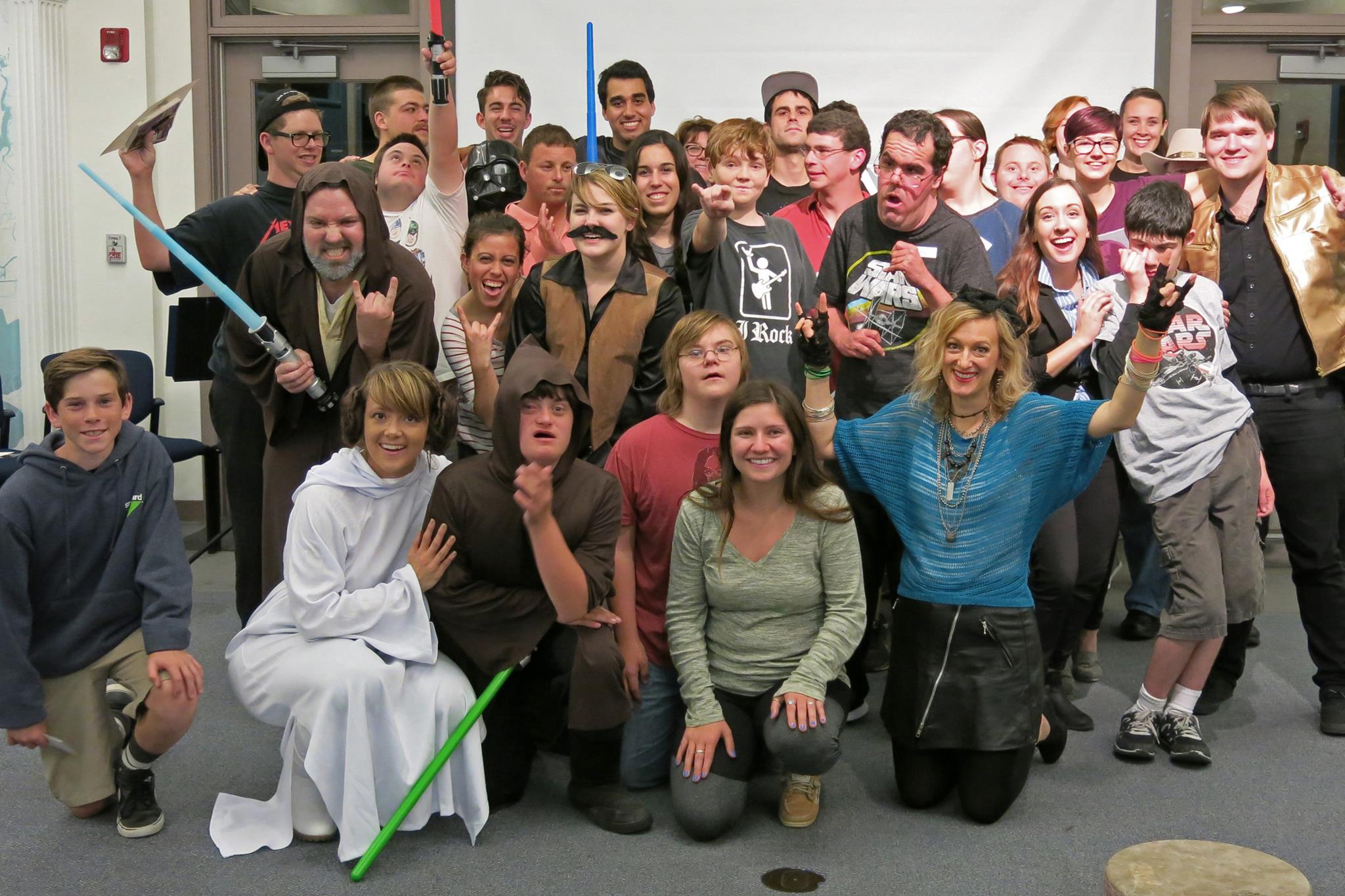
This past week, Banding Together’s Spring season of Jam Sessions came to a bittersweet end.  Throughout the past 5 months of being an intern, Jam Sessions became one of my weekly highlights and I will treasure some very special moments and memories from my first season being a mentor with Banding Together.

This Jam season I learned to watch, listen, and learn (in that order!).  I truly learned so much from observing the mentors/volunteers interact with and encourage participants as well as from participants being genuine friends to one another.  In my experience as an intern, so often I am jumping into things – taking leadership and problem solving – that this experience proved to be a very important opportunity for me to sit back and learn from watching others.  The patience, wisdom, and gentle, humble leadership I observed in other mentors taught me to be more aware of myself and to consistently encourage clients to be the absolute best they can be.

Another highlight from this season, was having the privilege of seeing participants experience such excitement and sheer joy when Jason Mraz performed as a Guest Musician.  This was such a special night of sharing in music with someone who has touched the world with his message and gift.  Thank you, Jason!

Lastly, Jam Sessions proved to be a complete blast!  The dance moves, the drum circle grooves, the action leader skills, personalities shining through with solos or at the mic, the relationships deepened and laughs shared… for me it was a true expression of the power and joy of making music with others.

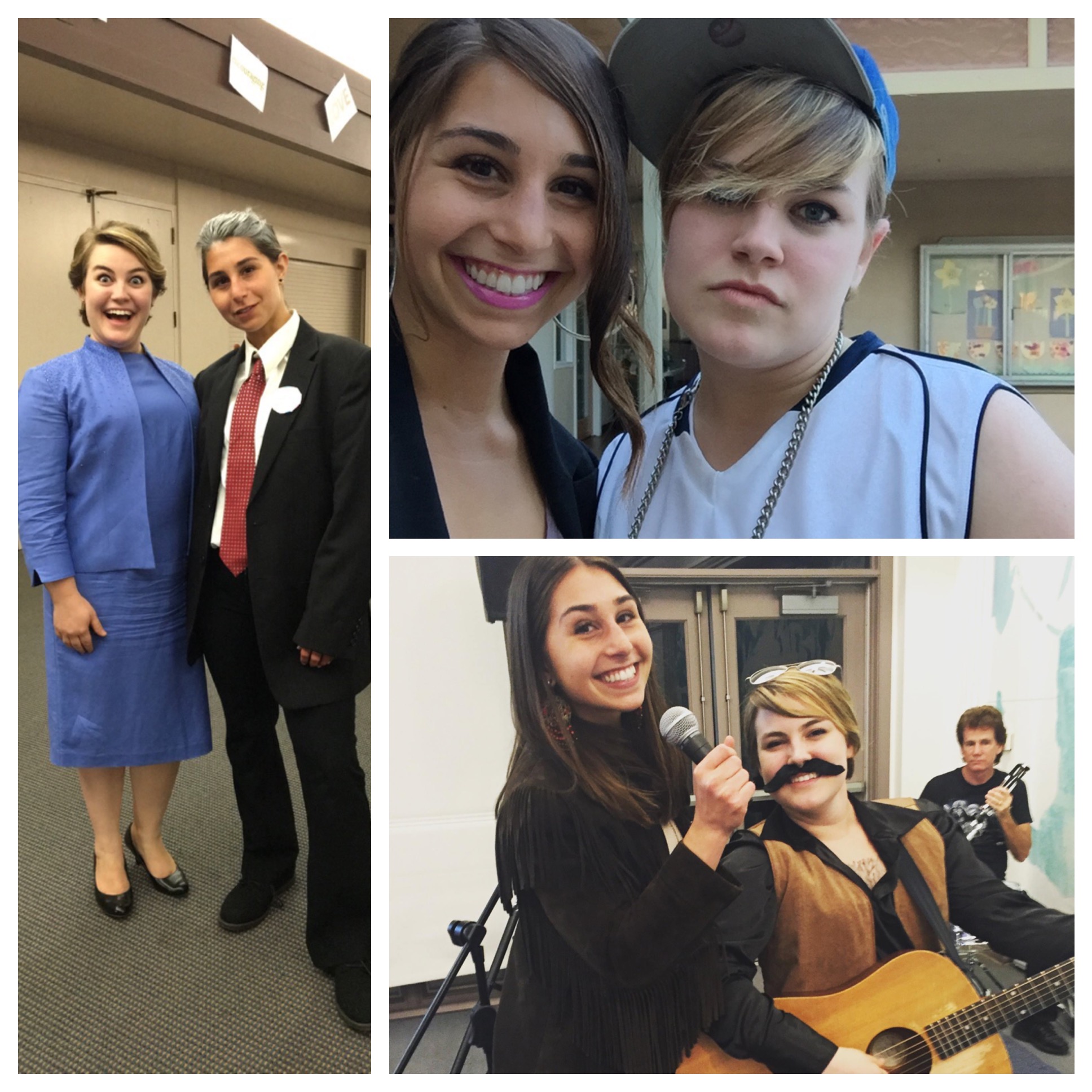
On a final side note, Chiara and I thoroughly enjoyed ourselves while taking the “Dress up as your favorite rock star!” prompt to heart.  Enjoy these pics of us as Jelena (Justin and Selena), Sonny and Cher, and Billary (Bill and Hillary).  (Oh, the many perks of being an intern!)

IMG_7002.JPG

That’s a wrap for our Spring session – here’s to another great one this fall!

Cheers!

-Marissa

If you are a music therapist, you know the feeling – you’re on an airplane or in an elevator when someone asks you what you do for a living.  The 30 seconds that follow have the potential to forever shape that individual’s understanding and view of the vast world of music therapy.  No pressure!

The vital importance of being an effective communicator and speaker cannot be over stated.  Whether your field is music therapy, marketing, or dog sitting, you have the power to help others understand the value and efficacy of your work.  So much about an individual brand or company is communicated in the initial, first-impression conversation and it’s crucial that you are prepared.

Recently in symposium, we discussed the (slightly overwhelming) topic of public speaking/presenting/communicating effectively.  Here are some helpful take aways if you’re looking to boost your ability to persuade, engage, and win-over others.

  1. Know your audience! Before you are able to effectively “sell” anything (whether services, an idea, a suggestion) to anyone, you first have to understand why it matters to them.  If you were speaking to a woman who has an 85-year-old mother with Dementia, do you think you would describe music therapy differently than if it were a man with a 4-year-old son with Autism?   Knowing your audience is so important to understanding how to effectively communicate with a variety of people.  When beginning a conversation, practice asking quick questions to get to know the person, where they’re coming from, and what they’re looking for in music therapy (or any other topic/field you may be discussing).
  1. Know your material. If you are educated, knowledgeable and well-rounded in your area of expertise, you are already set up for success to be an amazing communicator!  Remember, you are the expert.  Own what you say.  Use confident language like “we do” and “we are”, and be prepared to answer a variety of questions that might arise.  If you truly know your material, whether it is a 60-minute presentation, or a quick exchange in line at the grocery story – it will make all the difference in your confidence and will impact the other person’s quickly-forming opinion of you and of the field.
  1. Focus on the message, not on yourself. This is key!  As soon as we stop worrying about what the audience/other person is thinking of us, or how our voice sounds, or what our hair looks like, etc. etc., our message immediately becomes more impactful!  Focus on exactly what you want to communicate and on the power of your message.

For more helpful tips, visit Toastmasters.org.  They have a variety of free resources, from articles and videos to podcasts and conventions.  Some of the above tips were drawn from the following video:

And remember, haaaaave fun with it!

haaaaave fun with it

-Marissa

Neurologic Music Therapy group was led by Becca this past week in symposium.  She presented a TDM (Transformational Design Model) on one of her clients who is working on a speech and language goal of improved articulation.  She is using an OMREX intervention with kazoo as an initial step to address this goal area.

After Becca presented, the team got creative thinking of ways to expand this intervention to include language.  We discussed the importance of always tying breath support exercises with functional speech and language.  In order to put this into practice, we split into two groups and created interventions that focused on 2 bilabial consonants: p and m.  In less than 30 minutes, we created songs with visuals that focus on each of these letters.  The videos of our final products are included below, along with the chords/lyrics and visuals!

Screen Shot 2016-05-01 at 11.45.54 PM

Screen Shot 2016-05-01 at 11.48.00 PM

-Marissa