MTCCA’s Recital in the Park is quickly approaching! Our students are very excited to share their pieces they have been working hard to prepare.
Beyond practicing the songs they will be performing, our music therapists have been preparing our clients for various social and emotional aspects of the event.
Some of our clients have never performed in front of a live audience. To help them prepare for the experience, we rehearse their role step by step. We practice waiting for their name and bio to be read aloud, walking quietly on stage, playing their full piece without stopping, bowing to applause, and walking off stage.
One of our clients becomes easily distracted by many sounds in an audience. To prepare him for his performance, we have rehearsed his piece with recorded simulations of laughing, crying, coughing, or other distracting sounds an audience might make. Our goal is to generalize his sustained attention skills from the session to the performance.
Performing in front of a live audience can be nerve racking. To set our students up for success, we talk our clients through emotions they feel surrounding the event. We empower them with strategies to process and express these emotions, as well as cope with them. We teach our students to listen to their bodies and take a deep breath when they need to calm down.
We are so excited to share the musical talents of our amazing students! We hope to see you on the big day!
Many music therapy students ask, “What does a day in the life of an intern music therapist look like?” In fact, I remember asking this question when I interviewed for this internship. Interning in private practice is a unique and ever-changing experience. My short answer is that my life looks absolutely different every day. While my schedule has some consistency week to week, each day of the week is completely different.
Instead of sharing my schedule for each day of the week, I will share a Frankenstein version of a typical day, combining a few days into one.
On a typical day, my morning might start out in the community. I would lead a group music therapy session in an assisted living or group home. My supervisor and I will debrief and drive to the office. At the office, I will co-treat with another music therapist for an in-person client with autism. Next, I will take an hour lunch break. After lunch, I will co-lead a virtual session for a group of 30+ adults with developmental disabilities. Next, I will teach an adapted piano lesson for a young adult with autism. Then, I will have some administrative time to catch up on tracking data, session planning, writing my case study, and creating my special project. Next, I will co-lead a rehearsal session for a band of teens with autism. The end of my day is reserved for some clean-up and administrative time.
While this is what a typical day may look like, I have learned to be very flexible and adaptable. An intern’s schedule may change throughout the day! Clients cancel, no-show, and reschedule often. New clients are added and subtracted from my caseload at times. Adaptability is key to managing an ever-changing schedule!
Some individuals may find this type of scheduling overwhelming; not having a rigid routine to entrain to. However, I have found that this type of schedule is my ideal internship experience. I love having opportunities to lead sessions with populations and settings that are new to me. I am consistently challenged and never bored! In my short internship, I am thankful to be gaining a wealth of knowledge and experience with such a diverse client base.
Sometimes when I’ve been working with a group or client for awhile, I can feel stuck in a routine of using the same songs each week. A great way to add variety to sessions is to select a theme! One of my favorite themes I’ve used with groups is friendship.
There are so many great popular songs about friendship! Here are some of the songs I use:
You’ve Got a Friend in Me – Randy Newman
Count on Me – Bruno Mars
With a Little Help From My Friends – the Beatles
Friends Will Be Friends – Queen
Lean On Me – Bill Withers
We’re Going to be Friends – the White Stripes
True Friend – Hannah Montana
Umbrella – Rihanna
The theme of friendship can be utilized to work on social goals in a group setting. After singing a song about friendship, the music therapist can lead a discussion on what it means to be a good friend. This is an excellent opportunity for clients to practice communication skills and leadership in a group and generalize learnings to their own lives.
Friendship is an excellent subject for songwriting interventions. Many of the songs listed above work well for Mad Lib songwriting. The music therapist can prompt their client to share qualities they value in friends to fill in the lyrics. For non-speaking clients, music therapists can provide choices to fill in the blanks. Many clients benefit from using visuals or communication devices in songwriting.
Selecting themes is an excellent way to imbed structure into sessions and make learnings more memorable for clients.
Songwriting is a very popular intervention for music therapists! It is an extremely versatile activity that can be adapted to any client’s needs and song preferences. For some clients, songwriting may be a daunting new challenge, but that’s where music therapists come in!
One of my favorite methods for songwriting is what we call the “Mad Lib” method. We take an existing song, remove some lyrics, and help our clients fill in new ones to make it their own. Our clients love this because we can take a song they already know and love, and make it personal!
One of my favorite songs to use the “Mad Lib” method with is Weezer’s “Island in the Sun.” I typically ask my clients about their favorite activities and places to visit in the Summer, and how it makes them feel. With just a short conversation about Summer fun, we can fill in the blanks of our song!
Here’s what a completed “Mad Lib” song might look like:
I have used Mad Lib songwriting to target executive functioning goals pertaining to problem solving, social goals like creatively collaborating with peers, or simply as a means of creative expression. Mad Lib songwriting can be adapted for any population, but I tend to use it most with children and teens. Many of my clients with autism benefit from the imbedded structure of this intervention. Nonverbal clients can select new lyrics with speech generation devices or the music therapist may choose to prompt them with visual choices (holding up a picture of ice cream or pizza).
Mad Lib songwriting can be adapted to any client’s preferred song! The music therapist can choose to omit as many words as their client can fill in and add new verses over time. This style of songwriting provides enough structure to make composition accessible to anyone!
I had many amazing practicum experiences in my music therapy clinical training at Seattle Pacific. I had opportunities to lead sessions in many different settings with all kinds of populations. My musical and clinical repertoire expanded greatly over those four years. When I started my internship at MTCCA, I noticed some differences in methods and techniques between my new supervisors and former supervisors. Something I noticed immediately about the music therapists at MTCCA is that they always use visuals!
So many of our clients are visual learners and benefit from visual cues with familiar characters and shapes. Many of our sessions happen virtually over Zoom, so we utilize screen sharing to prompt our clients with visual presentations we’ve created on Google Slides and PowerPoint. These slides can have lyrics for therapeutic singing, prompts for songwriting, or pictures that coordinate with themes in a song.
I’ve created some improvisation exercises inspired by my colleagues’ use of slideshow visuals. I created a piano improvisation intervention in which I prompt the client to improvise a theme for a movie character. I chose to begin with the client’s favorite movie, the Jungle Book. Each slide presents a different character from the movie, helping cue the client to play in a new style.
Using slideshows for visuals is an amazing way to utilize pre-learned associations to teach new concepts in an interactive and engaging way!
As Autism Awareness Month comes to a close, I thought what better subject for our blog? Many of our clients at The Music Therapy Center of California (MTCCA), including those with autism, have had unique experiences through the pandemic. Exciting milestones in their lives have been shaped by lockdowns and social distancing. For some, it has inspired songs about the lockdown lifestyle. For others, it has looked like drive-thru graduations and music therapy over zoom.
One of MTCCA’s most loyal clients, Reid Moriarty, has been inspired to write dozens of songs about his experience through the pandemic. His mother’s piece for the San Diego Union Tribune shares about their family’s resilience living with autism through the pandemic. Everyone has experienced jarring changes this year. Stark changes in routine can be especially challenging for families with autism. Author Andrea Moriarty writes, “If necessity is the mother of invention, autism moms are inventors of the century.”
What many may not know is that autism may be a risk-factor for COVID-19. The research is new, but slowly gaining credibility. A study published by the National Center for Biotechnology examines why autistic individuals may be at a higher risk for health complications with COVID-19. The physiopathology of autism can involve abnormal immune responses which can make recovery from COVID-19 more challenging.
Sophy Chaffee, a parent of one of our clients, writes about her autistic son’s experience with the global pandemic in her piece for the San Diego Union Tribune. A common aspect of autism is difficulty identifying and expressing pain. She shares about her concerns that if her son contracted the deadly coronavirus, he may not have expressed feeling feverish or losing his sense of smell and taste, which could delay interventions to help him heal. Thankfully, he is now vaccinated; but Chaffee emphasizes the importance of increasing research and health training to help autistic individuals who may have challenges identifying and expressing pain.
While everyone has faced much adversity this past year, autistic individuals and their families have shown their resilience and inspired us to keep pressing on.
-Emma
Image retrieved from https://ak.picdn.net/shutterstock/videos/1926718/thumb/1.jpg
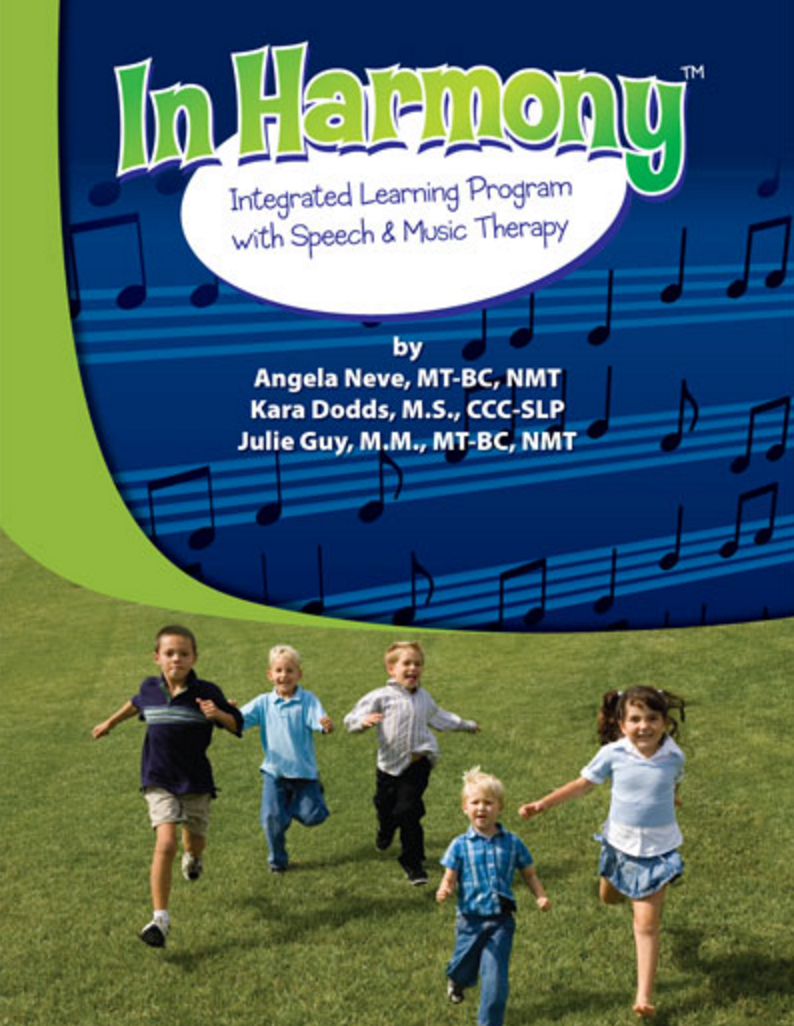
I recently had the opportunity of attending a training webinar on using music for coping strategies. Julie Guy and Angela Neve used a song from their integrated learning program, In Harmony. In Harmony combines specialties of music and speech therapy in order to teach kids essential life skills (social, academic, daily living, etc.). One of the primary takeaways from their webinar was their structured protocol for each lesson:
Interact and learn – Learn the song with visuals or hand-motions to help.
Pause for understanding – Review the song. Try using the karaoke track for practicing the lyrics.
Fade the music – Pull back the music to transition from singing to speech.
Generalize – Generalize the lesson and apply it to practical situations in everyday life.
I think these steps are a helpful framework for how to use these songs at home. It is important to make music lessons interactive. I am a kinesthetic learner, so the best way for me to learn is by interacting with a concept physically. Another helpful way to retain new information is by applying it to your own life. For instance, when you are using music to learn new coping strategies, consider a moment when you could have used a coping strategy. Use it as an example in the song! When the situation comes up again, sing the song. Even simply reciting the lyrics can be grounding.
In Harmony is an amazing resource including 60 page full-color digital program manual, 24 audio files and 120 color-coded digital photo flashcards. Printable chord charts and instrumental tracks allow the program to be adapted and customized to individualized needs. The In Harmony Integrated Learning program is available for purchase on MTCCA’s website. Additionally, individualized learning packs are available teaching skills such as brushing teeth, sharing our things, and starting conversations.
Join us for the rest of our series! Our next topic is “Daily Living” on April 19th. Anyone interested in learning about using music to teach children essential life skills is welcome to attend. Register here for free! Or attend a 2-hour In Harmony Music Strategies workshop sponsored by our friends at Autism Tree Project Foundation on April 29th for a $10 donation to their organization.
ATPF In Harmony Workshop Flyer
Learn more about teaching social skills through song here!
Woo we’ve made it to the end of internship! It’s crazy to look back at where I started and acknowledge the progress I’ve made at the finish line. In so many different facets of life, I’ve grown throughout this internship and I can’t believe I’m at the end of this journey. I’ve had such an amazing experience being an intern at MTCCA, and I wanted to share my top 10 learnings with you.
It’s okay not to have all the answers. This has been an interesting lesson to learn, as I love to know what is coming next for security’s sake. Not only this, I also try to do things to the best of my abilities and want to avoid feeling like I’m doing a disservice to myself and others around me if I don’t know what is happening next. While this can be frustrating at times, at the end of the day I’ve learned that it’s okay not to know everything that is going to happen. In the world of music therapy, you may not know how a client is going to respond to an intervention, you may have plans change throughout the day and you may not know how to do something you feel like you should know how to do. Don’t beat yourself up, and instead realize that there are so many learning opportunities and it’s okay not to have all the answers.
Comparison is the thief of joy (seriously). I am naturally someone who likes to achieve and do things to the best of my abilities, but I’ve realized this can come with lofty expectations. I had moments at the beginning of internship where I thought I was never going to be able to do what my supervisor and other therapists on the team were doing and this led to some negative self talk and doubts. As someone fresh in the field of music therapy, holding myself to the expectations that I should be doing everything as well as the other therapists on the team was simply not reasonable for myself, especially in the first couple of months of internship. Everyone has their own strengths and I’ve learned that these strengths play into one’s role as a music therapist in so many different ways.
Use your primary instrument. I had never really used my clarinet in sessions during college practicums, but I have learned so many cool ways to use my clarinet in sessions throughout my internship (I wrote a separate blog post about this, also). It’s been wonderful using my instrument during various opportunities in sessions, and I love seeing the way clients respond to the clarinet. It’s also rewarding to know that the years of studying on my instrument can continue to pay off outside of school!
The Yamaha EZ220 is life changing. Using the EZ220 keyboard has made so many sessions more engaging and motivating for clients. There are so many cool features on the keyboard that are great for transitions, Name That Tune, attention skills, fine motor skills. As someone who did not have many years of piano experience, the EZ220 keyboard has been so helpful in providing immediate auditory feedback that can address client goals by just clicking a few buttons.
Find a system that works for you. This applies to so many facets of internship. Whether it be time management, data collection, session planning, or even leading sessions, find what works best for you. This is something that took me a couple of months to develop just because of the newness of everything, but once I was able to figure out how I best work, I was able to increase efficiency and make less stress for myself in the long run.
Learn how to be the best version of yourself. This may sound kind of cliche, but it’s true, especially on days where you don’t feel at your best. From experience, there were a few days during internship where I did not feel well (the second COVID vaccine was a doozy for me!) but I still had responsibilities to my co-therapists and clients to be as close to my best as possible. When we feel 100%, of course it is much easier to get things done and feel energized to do tasks than if we are not. It certainly isn’t easy, but it’s during these times when we don’t feel our best that we need to put our best foot forward for those we serve.
Prioritize, please. Throughout college, I was always able to prioritize things well and figure out what I needed to work on. During internship though, there are so many different responsibilities and tasks that it is important to readdress how you prioritize and what things should be at the top of the “to-do” list. Taking a weekly inventory of what tasks I needed to complete each week was helpful for me. Ultimately, it’s great to narrow down as much as possible to one or two individual tasks that are the highest priority, even though sometimes it can feel like everything needs to be prioritized. This is a significant learning for me, as I’ve learned to take each day as it comes and figure out what my daily and weekly priorities are.
Give yourself grace. Internship is a huge learning experience. Similar to point number 1, you aren’t expected to know everything and people are there along the way to help you! I have appreciated all of the support, advice, constructive criticism provided by various people throughout my internship, as these have alleviated a lot of my questions and/or concerns and have helped remind me that the things I’m learning during internship are not always easy. It’s natural to make mistakes or to do things incorrectly during internship and I’ve learned that these experiences don’t define me, but instead make me more equipped for future experiences and are building my strengths and skills.
Take time for you. Self care is such an important aspect of being a music therapist. There are instances where you may feel like you’re expending all of your physical, mental and emotional energy in the work that you do so it is important to find avenues outside of the office that allow you to refresh. This looks different for everyone, but I’ve found that going to the beach, talking with friends and family, going on walks, getting extra sleep, and drinking water are a few things that have worked for me in regards to self care during internship. Being in such a beautiful city as San Diego, I’ve definitely taken advantage of some beautiful scenery to provide some self care.
You are stronger than you think. This is so true! I knew I’d learn about music therapy during the internship, but I had no idea I’d learn so much about myself. For the internship, I took my Strength’s Finder test and identified that 4/5 of my strengths are all relationship based strengths. These strengths have really played into my approach as a therapist and I’ve enjoyed getting to watch all five strengths become (ironically) stronger! Also, there are so many things coming your way during internship and it can feel like you aren’t able to handle it all, but trust me, you totally can! There are little victories along the way that lead up to the huge victory of completing internship and you are certainly capable of doing it all.
I have enjoyed sharing my learnings with you along the way of internship. It is crazy that this chapter has come to a close, but I’m so incredibly grateful for all I’ve learned along the way. Thank you for following this journey with me!
Through my internship, I have been given various presentation opportunities. I have experienced what it’s like to prepare for and present to an audience (virtually, of course) both at the national and regional music therapy conferences. In fact, one of the most recent presentation opportunities I’ve had was led by my internship director, Julie, where we talked about cool functions available on any keyboard including the Yamaha EZ-220 keyboard!
I never had experience using the EZ-220 keyboard prior to internship, so it was a learning curve figuring out what the different buttons on the keyboard do. Let me tell you though, it is a game changer when you learn how to use the cool functions! At the presentation, we discussed ways to use the song, style, and voice settings on the keyboard in therapy sessions. Certain settings, such as the follow the lights setting, are great for addressing goals such as sustained/selective attention and/or isolating individual fingers using a familiar song. The style setting is also great for picking a motivating background beat and providing steady and consistent tempos for rhythmic entrainment. The voice setting is awesome for motivating clients and making the keyboard sound like another instrument (e.g. a trumpet, electric guitar).
At the presentation, we also discussed the different ways of helping clients become more successful at using the keyboard by giving them opportunities to make choices when appropriate. For example, MTCCA has an adaptive keyboard kit of picture visuals that correspond with different songs, voices and styles. This can allow clients to make decisions for what to play on the keyboard based on the visuals. Along with this, we talked about other aspects of the kit that can be beneficial for clients, such as the color coded system with stickers and tabs to provide more visual support when figuring out the functions of the keyboard.
Benefits of the adaptive keyboard kit
It was a great opportunity overall to be able to present virtually and have experience interacting with audience members over a virtual platform. While it wasn’t in person, I still learned valuable information about ways to have an engaging presentation. For example, using visuals and pictures is an awesome way to engage people rather than having them read off of a screen with lengthy information. Another way of making a presentation engaging is to provide personal accounts or stories. I did this by providing a brief introduction and recounting specific client stories of when they’ve used the EZ-220 keyboard in sessions. This helped not only show a real life example of how to use the keyboard, but it also broke down the barrier between me as a co-presenter and the audience. The last thing I learned was to not take myself too seriously! Presentations or public speaking in general are skills that always made me anxious, but it helps to remind myself that I am human and that it’s okay to let my personality shine during these opportunities (no matter how goofy I actually am!).
If you want more information about purchasing the adaptive keyboard kit, click here. To purchase the EZ-220, click here.
There is also an amazing opportunity to learn more in depth about various functions of adaptive keyboards in MTCCA’s upcoming “Adapted Keyboard Series!” This is a free workshop series hosted on Zoom each Monday in May of 2021 and describes different ways to utilize the keyboard in both therapeutic and adaptive lesson settings. For more information and to register for the series, click this link!
I remember when I first entered practicums for music therapy in college, I thought I would never use my clarinet in sessions with clients. As much as I love the field of music therapy, I was afraid that all of the hours and dedication spent improving technique on my primary instrument for years would have been lost. Let me tell you, that is not the case! There are various opportunities to use wind and other novel instruments in sessions to achieve therapeutic goals and I’m excited to share some of the ways I’ve used the clarinet in sessions over the course of my internship.
Name That Tune
Name That Tune is a classic and great opportunity to use a novel instrument in sessions! As the title suggests, Name That Tune is a game where you play a familiar song for the client without lyrics and prompt the client(s) to guess the name of the song. This is great to achieve cognitive goals such as improved listening and attention skills. I have used Name That Tune in group and individual sessions, and clients appear to enjoy listening to songs they know on an instrument they don’t hear very often if at all!
Call and response
I’ve used the clarinet during call and response interventions, primarily to achieve goals such as: improved listening, self control, attention, turn taking and interpersonal skills. This type of intervention can be quite versatile, as you can be the leader and prompt the client to imitate what you play or you can have the client lead on an instrument and you as the therapist can imitate. You may choose to play a familiar song and you each play a phrase of a song; for the song “You’ve Got a Friend in Me,” I may play a line of the melody on my clarinet while the client plays the rhythm of the next line on a drum. We could also just pass an improvisatory musical phrase around like a rhythmic imitation exercise (ex: “Repeat after me. Listen first, then play what I play on your instrument”).
Playing as a duet or group
Another great way to utilize a primary instrument in sessions is to play the melody of a familiar song while the client(s) accompany on other instruments, kind of like a jam session! This is a great way to improve social skills, attention skills, motor skills, and build rapport with clients. For this intervention, choosing a motivating song for the client is an important consideration because it may play a role in the client’s participation. As the therapist, you may have specific instrument(s) in mind for the client to play during the intervention to target specific muscle groups and/or achieve certain goals, but engaging in cooperative play alone may be an important area of growth for the client. Here, I may encourage the client to keep a steady beat on the drum set or floor drum (like a rockstar, of course!) while I play a song on the clarinet for approximately 2 minutes (or whatever the client’s target sustained attention goal is).
One more thing I wanted to note was that, while we are in a pandemic, we can still use wind instruments during in person sessions! As a clarinetist, I have a mask with a hole cut for my mouthpiece along with a mask on my bell so the aerosol generation is maintained in the instrument.
Me and my super cool clarinet mask ensemble!
This being said, it is also up to the discretion of the client and parents/guardians whether or not they feel comfortable having a wind instrument played in the session. If you are interested in learning more information about the aerosol generation of various wind instruments, check out this study that was published in September 2020.
I hope these ideas are helpful for other therapists who may want to incorporate their novel instruments in sessions!