logo

Drop us a Line

info@themusictherapycenter.com

Intern Team

[youtube https://www.youtube.com/watch?v=ZsABTmT1_M0&w=560&h=315]

Alright, alright… Parks and Recreation aside, never underestimate the power of self care!  Which was (conveniently enough) the topic of our symposium last week.  Although our discussion of self-care didn’t exactly include cupcakes and new clothes, we did discuss some very practical and helpful tips on taking care of your body for the long-run.

Whether it be exercising 3 times a week, taking a full day to relax and do no work, or catching a sunset at the beach, everybody has their own routine for decompressing and maintaining some balance (and sanity!) in their lives.  As music therapists, it is so important for us to take care of our bodies in order to be at our best with our clients every day, as well as preserve our health and well-being so we will still be as able at 50 (and up) as we were at 25.

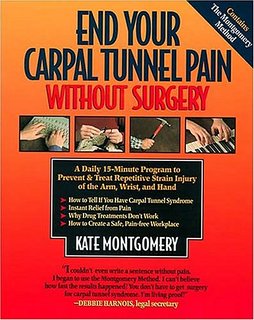
In Kate Montgomery’s book, “End your Carpal Tunnel Pain without Surgery” she has coined a 12 step method of stretches and self-care exercises to maintain healthy joints and muscles.

self care book

Here are a few tips from her method to maintain health and function in important areas like the wrists, back, and fingers!

  1. Posture – It’s all about those 90 degree angles when it comes to posture. Bad habits in posture can cause recurrent minor injuries to the neck joints, so it’s so important to be aware of how you carry yourself throughout the day, whether it’s working at a desk or bending down to be on a client’s level, be mindful of keeping 90 degree angles in your back, neck, and legs.
  1. Wrists – There are 3 exercises for the muscles, tendons and joints in the wrist. Wrist presses, wrist pulls, and wrist squeezes.  Practicing these daily will help keep your wrists in alignment and free of pain.
  1. Fingers – What an important part of the body for music therapists! Finger exercises are done one at a time, practicing dexterity and isolation of each finger.  Finger pulls, circles, bends (at each of the three joints) are a few ways to help open and restore energy within the finger joints as well as maintain strength in each individual finger (which can be really helpful for guitar).

You can practice these exercises on your lunch break, at a stop light, or any time between clients in the office.  Make them a part of your self-care practices after exercising or while relaxing in order to maintain dexterity and full function of these important parts of our bodies!


-Marissa

“Hide not your talents. They for use were made. What’s a sundial in the shade?”
— Benjamin Franklin

If someone asked you ‘What are your top strengths are how do you take advantage of them regularly?’ would you be able to give them a confident answer?  For many of us, it can be difficult to identify our areas of talent and even more difficult to make the most of them on a daily basis.  The MTCCA team uses a tool called StrengthsFinder 2.0 to categorize different strengths and better understand how to interact with others and become our best selves.

StrengthsFinder 2.0 by Tom Rath is a small but mighty book!

strengthsfinder

After purchasing, you’ll receive an access code in order to complete an online assessment and discover your top 5 strength themes.  The book includes 34 strength themes such as Empathy, Achiever, Communication and Maximizer.  A list of the themes along with a short description can be found here.  StrengthsFinder 2.0 gives full descriptions of each strength theme, personal accounts from others who posses that strength, as well as some tips for communicating with others who may or may not have that same strength.  This aspect is especially helpful when working with a team of individuals.

During symposium, each of our staff members shared their top 5 strengths and how they play out most into our lives.  Seeing someone else’s talents categorized can you help you understand so much more about a person!  What I found to be most helpful about seeing everyone’s strengths was learning about what that person needs and how to best communicate with them.  I often find myself communicating with others in the way I would like or need for them to communicate with me, but many times this is not the most effective way for their learning style or personality.  For example, I have Input as a strength and enjoy knowing many details and lots of information about the task or situation at hand.  Being educated on the topic helps me feel like I am completing my job to the best of my ability.  However, someone who has Achiever as a strength would much rather get it done quickly and efficiently instead of spending time mulling over the details.  Understanding these differences in others can drastically improve communication, relationships, and outcomes in the workplace.  StrengthsFinder 2.0 is unique because it encourages individuals to take advantage of their strengths consistently instead of spending time trying to improve their weaknesses.  By focusing on our natural gifts and inclinations, we maximize our potential.

I encourage you to evaluate your own top strengths and determine at least one thing you do every day that takes advantage of your unique capabilities and qualities!  Find out the strengths of the people with which you spend time and talk about how you can improve your communication based on each other’s needs.  I hope that what you discover will increase your self-awareness and improve the quality of your communication and relationships.  Here’s to becoming our best selves!

-Marissa

Kristin Hurley is currently pursuing her Bachelors of Arts in Music Therapy from California State University, Northridge, where her primary instrument is flute. Kristin has been actively involved in the community by volunteering as a music companion at Rady Children’s Hospital, Seasons Hospice of Los Angeles, various geriatrics facilities and at various elementary schools working with children with specials needs. Starting in 2009, when Kristin successfully completed the Music Together Teaching Certification developed by the Center for Music and Young Children, Princeton, New Jersey, her principal focus has been in Early Childhood Music. However, through practicum, Kristin gained experience in working with various populations such as; adults with traumatic brain injury, children with special needs including; autism, cerebral palsy and Down syndrome and adults with developmental and intellectual disabilities

Moving onto college, Kristin initially began to study the prerequisites for Nursing while taking a few music classes here and there. After just one semester of college and discovering the field of Music Therapy, Kristin decided to combine her love of music and her desire to heal. Kristin was determined to transfer to California State University, Northridge and study Music Therapy. Kristin’s first experience with music and children with special needs was in the cancer unit of San Diego’s Rady Children’s hospital. Kristin was invited to volunteer her time and music at the department’s monthly birthday celebration. Kristin had no prior experience to working with children with special needs but Kristin was over taken by her natural tendency to nurture as she lovingly brought the joy of music to the children of Rady Children’s hospital. It was after this experience that Kristin knew that music is for everyone and that she had found where she was meant to be.

“My love of music began about seventeen years ago when my aunt gave me my first flute and I began playing in my middle school band. The role that music played in my life began to transform into shaping who I am today. It is in music where I find strength, joy and healing and it is music, love and education that drives my passion to promote well-being in the lives of others.”

Headshot 5-11-15

Tara is currently a Master’s/Equivalency student in Music Therapy at Texas Woman’s University in Denton, TX. Her main instruments are voice and piano. She graduated Cum Laude from Texas Wesleyan University with her Bachelor’s in Music Education in 2012. While attending Texas Wesleyan, Tara was actively involved in multiple choirs, opera productions, and the national music fraternity Sigma Alpha Iota (President in 2010-2011). Tara has many years experience teaching private piano and voice lessons, as well as leading a Kindermusik class through the Music Academy of Denton. But it was music therapy that truly touched her life and sparked a passion she knew she had to pursue. Tara is excited to be completing her internship with The Music Therapy Center of California and hopes to continue growing in her knowledge and passion for music therapy.

We are excited to announce our newest intern!

Nerissa Manela is currently pursuing her Bachelor of Music in Music Education and Music Therapy at the University of Miami (UM), where her principal instrument is violin. She was very involved at UM, including her roles in the Alpha Mu Music Therapy Club, Secretary of the UM National Association for Music Education, and violinist in the Frost Symphony Orchestra. Nerissa has gotten involved in music therapy at the national level by serving as a student representative on the American Music Therapy Association’s internship Approval Committee. She also spent a summer in Ireland working with music therapists at COPE Foundation, an organization that serves over 1,000 individuals with disabilities.

“From the time I was in my primary school orchestra, the music culture impacted everything that I did. Music played such a big role in my life, and I wanted to pass on my positive experience with music to others. Music therapy allows me to pursue my passions for music and helping people.”

It’s hard to believe that my internship is already almost over! It can be difficult to pinpoint exactly what you learn in experiences like these, when time is flying by and you’re constantly taking in new information, increasing your self-awareness, and growing as a professional with every session you facilitate. Unfortunately, if you have a personality like mine that assumes there is “always room for improvement” it can also be hard sometimes to see your own progress. I thought I would take some time to sit down and think about the ways I have grown by writing about the top five things I’ve learned throughout my internship.


Tuning into the client’s feelings and needs
When I first started working with kids with autism, I would get stressed out thinking that I had to have all the answers and know exactly what they needed when they started getting over-stimulated or frustrated. Recently, I’ve realized it’s more important to notice how they are moving and responding before they even walk into the session and to pace our session around that initial greeting out in the waiting room (AKA the iso principle). With non-verbal clients, I’ve learned to show patience and acceptance when they are feeling upset or overwhelmed, and I try to help them understand that I am willing to work with them to identify what they need. I used to try and change the intervention immediately, or make them switch instruments, or assume they needed something different and that I was supposed to be so tuned into them that I could read their mind. Of course that’s impossible and a totally unrealistic goal to set for myself. Now I know it’s best to just be there with the client, listening to what they are communicating non-verbally and offering solutions with choices and patience. Oftentimes just helping them to calm their bodies down is all they needed and once they know you are really, truly listening to them, they will be more willing to work through things with you as well!

Teaching new concepts through music – academics, social skills, and daily living skills
In practicum I learned a lot about facilitating interventions and encouraging responses and participation, but I never really had to teach a new concept before like I have here. Throughout my internship I’ve tried to find new ways to teach academic skills, social skills, and daily living skills using music based interventions with the help of visuals or other materials. I really had to think through some interventions and figure out the best ways to break things down and make it work for the client. From there, I was able to successfully adapt the intervention for other clients and increase my overall repertoire of interventions and songs. The most important thing I’ve learned to focus on with these types of interventions is to make music the primary tool and motivator and to make sure it’s easy to generalize and that it’s fitting their goals.

Letting go of being perfect and embracing being human
As a young music therapist, I’m very concerned about my level of professionalism in all of my interactions and sessions. I want to represent the field well by being a professional who is reliable and knowledgeable. However, I feel like I have let that hold me back from opening up and just being silly or honest when the time is right. In the past few months, I’ve realized it’s more important for our clients to see us being regular human beings, messing up, laughing at our own mistakes, and showing our personality, than it is for them to take part in “perfect” interventions and hear “perfectly” performed songs. The less concerned I am about how my intervention is going, the more concerned I can be about my presence and connection with the client, and that is where the magic happens!

Managing time and projects
I came into this internship feeling like time management and organizational skills were some of my biggest weaknesses. Now that I’m wrapping things up, I’m amazed at how well I have learned to organize projects, set deadlines for myself, and complete daily tasks in a timely manner. One of the biggest things I’ve learned to do is to stop wrestling with unimportant details in a project, like formatting documents, and just work on the main points. Also, I’ve learned that breaking down big projects into smaller steps and setting realistic deadlines for each step goes a long way. I was able to work on my final projects without getting burned out and with plenty of time left to review, edit, and finalize all those little formatting issues I used to waste hours on! I recommend a book called “The Practicing Mind” by Thomas Sterner for good strategies on time management and setting goals for yourself. I also recommend a six month internship in music therapy to really put your abilities to the test 😉

Effectively communicating with parents and other professionals
While I have complete confidence in the validity of music therapy as a scientific field and the impact it has in people’s lives, I used to have trouble communicating that to others. There is so much potential for music therapy in someone’s life and it can be a struggle to accurately and concisely convey all of the ways someone could benefit from it. Besides just stumbling through terminology and jargon that I didn’t really, fully understand, I didn’t have many real life experiences to share from a personal perspective. But I’ve had so many wonderful opportunities here to not only formally present music therapy to an audience, but to also work on daily communication with parents and facility staff members after each of my sessions. I have become more confident in my ability to explain what I’m doing and why, and of course, how the client is responding to the interventions and their overall progress.


All in all, this has been an incredible experience and I am so grateful to have worked with so many wonderful families and their amazing kids! I have met so many professionals who have been helpful and encouraging and I have received some amazing feedback, guidance, and advice from my co-workers and supervisors. I am truly looking forward to my future as a professional music therapist!


 

Our team recently had the pleasure of doing a workshop on piano accompaniment techniques with JayJay Lim, a wonderful music therapist based in the San Diego area.

We started off with a simple warm up; playing V7 chords in a circle of fifths pattern. Using a metronome to keep us all in time, we played 2 measures of C7, 2 measure of F7, 2 mesaures of Bb7 and so on. If this workout is comfortable, the next step is to play through the circle of fifths playing V7 inversions. JayJay also suggested playing through this same exercise playing min7 chords. Again, if it’s easy, play inversions! Of course this warm up is good for your muscles, but doing it without sheet music is good for warming up that cognitive functioning too!

Next, we reviewed some important tips for effective accompaniment. If you’re leading a singing intervention in a group, it’s important to give your clients some kind of introduction so they get a feel for the key, the tempo, and when to join in. JayJay suggests introducing the song by playing the melody line of the last 4 measures of the song, then giving a strong cue with their starting pitch or with the first few notes of the melody.

JayJay encouraged us to practice a few easy folk songs, including Home on the Range and You Are My Sunshine, with the left hand playing a pattern or just a bass rhythm, and to only play chords in the right hand on the first beat of each measure.  

One of the most beneficial tips I took from the workshop; put two colored stickers an octave apart on the keyboard and only play right hand chords between those two stickers, including V7 chords. You can play on the stickers, but you can’t go past them! This forces you to get more comfortable with inversions so you’re not always playing everything in root position.

I’ve been incorporating these into my daily practice time and I have already seen a huge improvement! It’s easy to fall into the same playing patterns or accompaniment styles, especially if you’re not a pianist (like myself). Simple, functional practice techniques like these can go a long way in increasing your flexibility and familiarity on the keyboard. The less you have to think about which keys to play for which inverted chords, the better off you’ll be in not only accompaniment, but improvisation and performance as well.


Best of luck in your practice time!


Toby


Toby, intern at the Music Therapy Center of California, is pursuing her degree in Music Therapy with a concentration in Vocal Performance from Radford University. Toby’s primary instrument is voice, but she has been playing guitar and piano since her early teens. She also enjoys writing and recording original songs and playing with other musicians as well.

Toby first decided to study music therapy in 2007 when she was interning at Invisible Children, a San Diego based non-profit raising awareness and funds for ex-child soldiers in east Africa. While working with youth and other volunteers from around the United States, Toby learned about what it means to pursue your passions and started contemplating what it was she wanted pursue and if it could help others. After watching a short documentary about music therapy and rehabilitation overseas, she decided pursuing music therapy as a career was a way for her to both follow her love for music and to serve people in her community.

“I can’t imagine a life without music. Listening to and playing music has always been a way for me to express my thoughts and feelings and make connections with others. I love that music therapy is so multifaceted; the scientific research is fascinating, but it doesn’t get in the way of music being fun and engaging for groups and individuals. I love sharing special moments with people through music and I’m excited to be working in a field where I am able to bring positive change to their lives by creating music together!”

Image

markMark McKenna is currently a music therapy intern for The Music Therapy Center of California. He will receive his Bachelor of Music in music therapy from Arizona State University upon completion of his six-month internship.

Mark’s primary instrument is tuba, which he studied during his time at Arizona State. He has played in several ensembles, including wind band, marching band, orchestra, jazz band, chamber ensembles, and community ensembles. Throughout his years of course work, Mark has worked with a variety of different populations and age groups, including elderly adults with dementia, children with special needs, and adults with special needs.  Mark’s coursework has also led to him learning many different instruments such as guitar, piano, percussion, and voice, which he has been learning to adapt to therapeutic settings.

Mark’s Story

“For as long as I can remember, music has always been a constant, driving force in my life. My older brother and I were always listening to soundtracks from Disney movies, and other movies such as Ghost Busters and Blues Brothers. I first started learning the tuba when I joined the school band in sixth grade. By the time I was a senior in high school, I was fully enveloped in the world of music, and I knew that I wanted to make a living out of it. Initially, I wanted to be a music teacher. However, after discovering music therapy and doing a bit of research on the profession, I knew that it was what I wanted to do with my life, and I haven’t looked back since!”

CraigCraig Ruggels is currently a music therapy intern for The Music Therapy Center of California. He is pursuing his Maters degree in music therapy from Western Michigan University in Kalamazoo, Michigan, after receiving his Bachelor’s degree in music from Eastern Washington University in Cheney, Washington.

Craig’s primary instrument is anything percussion. Craig as a music therapy student has become proficient in guitar and piano, as well. He has worked with individual who have mental, physical and psychological disabilities and/or impairments.

Craig’s story

“Music has always had a special place in my life; it has been there in times of celebration and not so happy times. Being able to play music gives me great joy. When returning to college to pursue my degree in music at a later stage in life I found the life of a college student to be incredibly stressful. I found music therapy as a way to relieve my stress and to give me a new direction to follow as a career. I have never regretted that choice, working as a music therapy give me a sense of fulfillment knowing that I am helping to improve the lives of others.”